

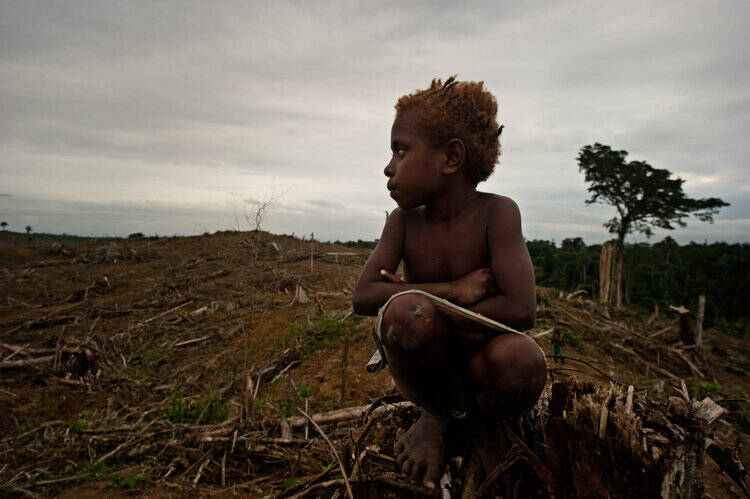
The Metaphysical Collapse
A Genealogy of Humanity’s Psychic Cosmic Order and Its Terminal Dissolution
Introduction: The Collapse
This article does not offer a traditional diagnosis of cultural decline. It is neither a lament for a lost golden age nor a straightforward critique of modernity. Rather, it is a genealogy of humanity’s successive centres of meaning — what we may call 'cosmoses' — and an examination of what happens when the capacity to generate new centres is exhausted.
Throughout history, human civilisation has passed through successive epochs of meaning-making. Each epoch has organised reality, anchored identity and oriented the collective journey. These epochs range from the animate universe of prehistoric nature peoples to the hierarchical gods and priest-kings of early civilisations, the axial sages and prophets, the humanist sovereignty of the Enlightenment subject and, finally, the algorithmic authority of the machine. Each epoch provided a metaphysical structure within which existence could be understood and lived.
Today, however, we are entering a final and unprecedented stage. Not the rise of a new centre, but the collapse of all centres. This condition is termed “cosmological anomie”: a total metaphysical rupture in which institutions and beliefs dissolve and the inner cosmos itself — the human capacity to orient, to create meaning and to belong — begins to disintegrate.
The theory of 'Psycho-Cosmocide', developed within Kogoya’s civilisational diagnosis framework, provides a term to describe this phenomenon. It describes the systematic destruction of not bodies, but the inner psychic and cosmological architecture that gives human life meaning. This essay traces the history of that destruction through five epochs, identifies the current terminal condition, and considers the profound tragedy of the colonised antidote: the nature-based peoples, particularly the Papuans of West New Guinea, who possess something that the Machine Cosmos lacks and is destroying.
Part I: The Five Cosmoses — A Genealogy of Meaning.
The history of human consciousness encompasses more than just technological advancement, agricultural shifts and political transitions. Rather, it is a succession of structured totalities of meaning — invisible architectures of the mind that define the relationship between the individual self and the infinite expanse of reality. Throughout history, a particular gravitational centre has held reality together, providing what we might call a 'North Star' for ethics, purpose and identity.
- The Nature-Centred Cosmos: The Animate Universe.
Prehistory to c. 10,000 BCE
In the primordial dawn of consciousness, humanity dwelled within a living, breathing cosmological architecture. This was the Animate Universe — a period characterised by what philosophers have termed 'original participation'. During this era, the distinction between subject and object, between the 'I' and the 'It', did not exist as a psychic fracture. For the Paleolithic and early Neolithic mind, the cosmos was a sacred equilibrium. Rivers, storms and stars were not 'resources' to be exploited or 'phenomena' to be measured; they were sovereign presences. As evidenced by the cave paintings of Lascaux (c. 17,000 BCE) and the lithic carvings at Göbekli Tepe (c. 9,000 BCE), humans were participants in the natural world, not masters of it. Meaning was not constructed through labour or logic, but was given, understood and reciprocated between all living systems. Existence was a constant dialogue with a sentient environment. The self was simply 'nature knowing itself'. The skin was not a boundary, but a permeable membrane connecting the internal soul to the external world. This was perhaps the first and last time that humanity could truthfully say: 'We are home.' Alienation was impossible because humans were not separate from the universe — they were the universe reflecting upon itself.
2. The Gods and Kings Cosmos: The Hierarchical Absolute.
Early civilisations c. 3,500–800 BCE.
As the first great civilisations emerged in the fertile regions of the Nile Valley, the Tigris–Euphrates basin and the Indus Valley, the diffuse spirit of nature was forcibly distilled into a new structure. The wild, horizontal divinity of the forest was channelled into the vertical figure of the God-King. This marked the birth of the Hierarchical Absolute.
In ancient Sumer, Akkad and Pharaonic Egypt, reality became vertical. Power descended from the heavens through the priest-king — the Lugal or pharaoh — and down into the subject. The sacred became centralised. Order was enforced through ritual and violence. The cosmos became political architecture and humans became subordinate units within a cosmic bureaucracy.
This period marks the origin of what Kogoya’s framework identifies as the 'Civilisational Psycho-Cosmocide Virus'. By localising the sacred in specific stone temples and royal lineages, the vast divinity of the natural world began to wither. The metaphysical image of God was reimagined as an earthly king: a powerful, bearded, anthropomorphic figure seated on a throne in the clouds. Any imagery of the divine reflecting the diverse colours of the earth or the non-human world was demonised and purged. The cosmos had become a political empire, and the human psyche was its first conquered territory.
3. The Prophets and Sages Cosmos: The Enlightened Intermediary.
The Axial Age: c. 800–200 BCE.
Between the great empires and the modern world, the axis of meaning shifted from external authority to internal enlightenment. Philosopher Karl Jaspers identified this period as the Axial Age, when a new class of 'cosmic translators' apparently arose independently across the globe to mediate between humans and the absolute. In Greece, Socrates, Plato and Aristotle transitioned from myth to Logos — reason as the organising principle of reality. In India, Siddhartha Gautama (the Buddha) and the authors of the Upanishads explored the interiority of the soul through the concept of Atman. In China, Laozi articulated the Dao, while Confucius defined the structures of social harmony. In the Levant, the Hebrew prophets Isaiah and Jeremiah demanded ethical monotheism over the performance of ritual sacrifice. Meaning was no longer the sole domain of a king; it was now a truth to be discovered through disciplined inner inquiry. This was an important democratisation of cosmic access. However, it also had a subtle, long-term cost. The cosmos was beginning to be abstracted from a felt presence to a decoded text. The world was no longer a place to be inhabited, but rather a problem to be interpreted. The sage replaced the soil as humanity’s primary point of reference.
4. The Humanist Cosmos: The Sovereign Subject.
Renaissance and Enlightenment: c. 1350–1900 CE.
During the European Renaissance and the Enlightenment (1300 onwards), a daring metaphysical coup was enacted: the divine was evicted from the centre and replaced with Man. This is the era of the Sovereign Subject — the period in which 'Man is the measure of all things'. Following the work of René Descartes, who in 1637 formally separated the mind from the body, inaugurating Cartesian dualism, and Isaac Newton, whose laws of motion redefined the cosmos as a mechanical system, the rational, rights-bearing individual became the new gravitational centre of reality. Progress replaced Providence. History ceased to be God's unfolding plan and became humanity's autobiography.
Yet this 'Man' was not universal. The Sovereign Subject was modelled on a very specific figure: the Whiteman of the European intellectual tradition. The cosmos became a private estate. By making the human subject the sole source of value, Western modernity severed its connection to any objective cosmic order. We became kings of a hollowed-out world.
'God is dead. God remains dead. And we have killed him.' - Friedrich Nietzsche, The Gay Science (1882).
Friedrich Nietzsche, arguably the most prescient thinker of the nineteenth century, foresaw this tragedy. His famous declaration was not about religious belief, but rather a diagnosis of the death of the entire metaphysical superstructure — the 'highest values' — that had given Western civilisation purpose, coherence and direction. Nietzsche died in 1889 in a state of mental collapse — a literal embodiment, one might argue, of the metaphorical inner sky falling.
5. The Machine Cosmos: The Algorithmic Absolute.
Late modernity (c. 1945–2020).
Following the catastrophic failures of the world wars, the humanist cosmos buckled under its own contradictions. The sovereign subject proved too slow, too emotional and too 'messy' to meet the demands of nuclear physics, global markets and bureaucratic administration. The machine took its place.
In the Algorithmic Absolute, efficiency becomes the only ethic. Data displaces experience. Intuition is treated as an error, and sensors, spreadsheets and algorithms are trusted instead. From Norbert Wiener's mid-twentieth-century cybernetics to the twenty-first-century Big Data paradigm, the cosmos has been reframed as a system to be optimised. Human beings are now understood to be the most inefficient component within that system. We are no longer masters of the tool; we are merely data points fuelling the engine. The centre is a cold, mathematical calculation.
Part II. The Terminal Stage — Cosmological Anomie.
The succession of centres has come to an end.
- Nature yielded to God.
- The Sage yielded to Man.
- The sage yielded to man.
- Man has yielded to the machine.
- The machine has now yielded to nothingness.
This is cosmological anomie. It is important to distinguish this from nihilism, with which it is often confused. Nihilism is an angry protest; it is the pain of someone who remembers what it was like to have meaning and is upset by its absence. Nihilism retains the vocabulary of meaning, even though it denies its existence.
Cosmological anomie is different. It is a silent evaporation. It is the condition in which we lack the vocabulary to describe what has been lost. The disorientation is so complete that it does not present itself as such. This is the perfected state of the Psycho-Cosmocide Virus: not the scream, but the silence.
1. Everywhere Yet Nowhere: The collapse of the inner cosmic map.
In this terminal stage, the collective human psyche is caught in a profound paradox: being everywhere yet nowhere. Never before has humanity been so connected. Through digital networks, we can be present across continents in real time, be embedded in multiple spaces simultaneously and access almost any information, person or culture from any moment in recorded history.
Yet this spatial expansion conceals a profound interior contraction. The deeper structures of presence — rootedness in land, embodied community, shared meaning and intergenerational narrative — are eroding at precisely the same rate that digital connectivity is accelerating. Connection multiplies, but belonging disappears. Communication speeds up, but understanding becomes more superficial. Presence is replaced by access. We are connected to everything, yet anchored to nothing because the metaphysical cornerstone has been dismantled.
2. The Cult of Progress: Motion Without Destination.
This condition is sustained and concealed by a powerful, largely unexamined force: the Cult of Progress. Humanity is driven forward at an ever-increasing pace through technological advancement, economic growth, perpetual innovation and continuous upgrading. Movement is celebrated as inherently virtuous. Acceleration is treated as a necessity.
However, this forward motion conceals a deeper void. In its classical sense, progress implied direction — a movement towards a goal, a telos or an imagined future. In the anomic condition, however, this orientation has dissolved. The future is no longer clearly imagined, agreed upon collectively, or pursued meaningfully. What remains is motion without destination. We move not because we know where we are going, but because stopping would reveal our lack of direction. Speed becomes a defence mechanism. Acceleration becomes a form of existential avoidance.
This is not progress towards a future. It is a flight from the realisation that the future itself has lost coherence.
Within this condition, humanity occupies what may be termed a 'civilisational death trench'. This is not a sudden collapse. It is not an apocalyptic event that announces itself with clarity and finality. Instead, it is a prolonged state of suspended disintegration. The system continues to function: institutions operate, economies grow, technologies advance and societies appear stable. But beneath this surface activity, something fundamental is eroding. The structures that give life meaning, such as shared narratives, moral orientation and metaphysical grounding, are fragmenting without being replaced.
We are not witnessing the end of activity. Rather, we are witnessing the continuation of activity after meaning has begun to collapse. This is what makes the situation so challenging to recognise and address.
3. The Silence of the Sirens.
In previous epochs, civilisation crises were accompanied by clear signals. Famine, war, ecological breakdown and moral collapse acted as alarms, demanding recognition and a response and provoking transformation. In the current anomic condition, however, something far more dangerous is happening: the signalling system itself is beginning to fail.
The ability to recognise a crisis — to feel that something is fundamentally wrong — is gradually lost. Contradictions become normalised. Disorientation becomes routine. Rather than being understood as structural, anxiety is individualised. Rather than amplifying the warning signal, the digital noise of the contemporary environment overwrites it. Humanity becomes unable to hear its own warnings, not because there is no danger, but because the mechanisms that would produce the alarm have been disabled. This is the most advanced stage of the Psycho-Cosmocide Virus infection.
4. The Sinking Ship: An Analogy of Terminal Anomie.
The current human condition can be understood through the sustained metaphor of the sinking ship. Humanity is aboard a vast, technologically advanced vessel, moving steadily across an open ocean. On the surface, the ship appears invincible. The lights are bright. The engines hum. The Cult of Progress propels the ship forward at high speed, and the passengers are reassured by the visible machinery of the Machine Cosmos.
However, beneath the waterline, the ship is taking on water. The flooding is subtle at first, slowly drowning the foundational layers of connection to nature and sacred meaning. The mechanisms designed to detect danger — the intuitive wisdom of the soul, the warnings of nature-based peoples and the signal of ecological crisis — have been silenced. Some have been disabled by design. Others have been drowned out by the noise of 'development'.
We are moving faster than ever. We are already submerged. The ship has now reached the most dangerous state of all: it no longer realises that it is sinking. The Psycho-Cosmocide Virus has silenced the inner logos, the discerning spirit. The ultimate manifestation of the virus is not the ship sinking, but the passengers celebrating the speed.
Part III: The Colonised Antidote.
The terminal logic of Cosmological Anomie is nowhere more evident — or more tragic — than in the treatment of nature-based peoples, who still carry the living memory of the Animate Universe. The Papuans of Indonesian-occupied West New Guinea are the most acute case of all such peoples.
They are not 'primitive' peoples in the colonial sense of the term. They are custodians of an ancient and sophisticated relationship with the living cosmos — one that predates the Hierarchical Absolute, survives the Axial Age and resists the Sovereign Subject. Their cosmologies, land-based epistemologies and communal practices embody the very orientation that the Machine Cosmos has destroyed: a direct, participatory, meaning-saturated relationship with the non-human world.
In the framework of Psycho-Cosmocide, these peoples are the antidote. They do not represent the past, but the future; not a primitive stage of development to be overcome, but a living alternative to the terminal anomie consuming the dominant civilisation. They possess knowledge that the Machine Cosmos has forgotten, and which cannot be recovered by any algorithm: how to feel at home.
Yet, within the framework of Cosmological Anomie, they are demonised. They are portrayed as 'civilisational problems' or 'defects' that must be solved through development, religious conversion and progress. The qualities that define them—their rejection of the Machine's logic, their connection to the land, and their cosmological depth—are considered pathologies in need of correction.
In occupied West Papua, this logic is realised through military violence, forced displacement, cultural erasure and systematic ethnic persecution. Within the framework of the Machine Cosmos, the Indonesian state treats the Papuan cosmological worldview as an obstacle to development. Religious missionaries, operating within the framework of the long legacy of the Hierarchical Absolute, treat it as a spiritual deficiency. In their different ways, both are performing the same act: Psycho-Cosmocide.
In attempting to 'fix' these cultures, the Machine Cosmos is destroying the last remaining cure for its own terminal illness.
The colonisation of the Papuans is not merely a human rights violation in the conventional sense. It is the destruction of the last living library of the Animate Universe. It is the extermination of the antidote to the crisis that the colonising civilisation cannot name. We are wandering through the debris of a collapsed metaphysical sky, silencing the very voices that know the way home.
The extermination of the Papuans is not incidental to the metaphysical collapse. It is its final and most concentrated expression.
Conclusion: After the Collapse, Before the Return.
This genealogy does not offer a solution for recovery. To do so would be to assume the existence of a rational programme capable of solving a metaphysical problem, which is an act of the Humanist or Machine Cosmos. The depth of cosmological anomie resists solution logic. It requires something older and more difficult: recognition.
The first step in responding to the metaphysical collapse is to pause, listen to the silence and describe it accurately. To recognise that acceleration is not progress, but flight. To recognise that connectivity is not community, but a substitute. It means recognising that the Cult of Progress is not a direction, but a defence mechanism against the abyss of meaninglessness beneath it.
The second step is to listen, not to algorithms, institutions of the dominant civilisation or inherited frameworks of the Hierarchical Absolute, but to those who still carry the memory of the Animate Universe. The Papuans and other such peoples across the world are not relics. They are witnesses. They are living proof that a different relationship between humans and the cosmos is possible, and that the Animate Universe was not just a developmental phase, but a way of being that was dismantled rather than superseded.
The theory of Psycho-Cosmocide does not suggest that we can simply revert to the animate universe. History cannot be reversed. However, it does argue that, without recovering the lost relationship between the human soul and the living cosmos in that first decisive act of cosmic centralisation, no new centre will hold. The gears of metaphysical replacement have ground to a halt, not because the human imagination has failed, but because every centre generated since the Hierarchical Absolute has been built on the same foundational error: separating the human being from the animate world that is their home.
The Metaphysical Collapse is not the end. It is a crisis that, if we choose to heed it, could mark the beginning of a different kind of reckoning. Not a new cosmos built in the image of the machine, but rather a restored connection to the living architecture of meaning that preceded it.
We are wandering through the debris of a collapsed of the inner metaphysical sky. The voices that know the way home are still speaking. The question is whether we will silence them before we learn to listen.
Add comment
Comments